

HubSpot Unbound 2026: the CRM goes agentic
 Quentin Mortel·29 SEPTEMBER 2026·6 MIN
From 16 to 18 September in Boston, HubSpot presented its biggest product release in years. As a HubSpot partner, Universem breaks down what’s new and what it actually changes for your teams.
The foundation: Growth Context
In short
Every new feature rests on the same principle: giving the AI a dynamic, structured understanding of the business, its customers and its teams.
The foundation has three layers: business context (products, positioning, brand voice), customer context (conversations, ICP, intent signals) and team context (roles, processes, approvals). That structure is what separates an AI that guesses from one that understands why an action makes sense.
Definition
- Growth Context
- HubSpot’s term for the dynamic knowledge AI needs about your business, your customers and your teams in order to act appropriately rather than just respond.
What’s new in the product
In short
A rebuilt Breeze Assistant, a CRM that updates itself, a single screen for data quality, and a Marketing Studio that brings all your campaigns together.
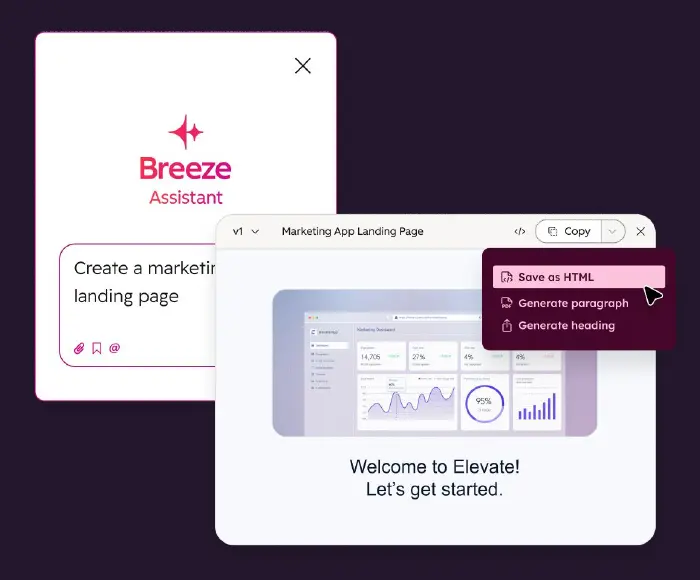
Breeze Assistant has been rebuilt from scratch: you describe a goal and it calls on the right agents to reach it, produces formatted documents, keeps a project’s context from one conversation to the next, and can now be driven by voice on mobile.
The self-updating CRM automatically logs calls, emails and meetings on contact and deal records, and suggests stage updates you approve in one click. Sales teams save real time and still keep the final say.
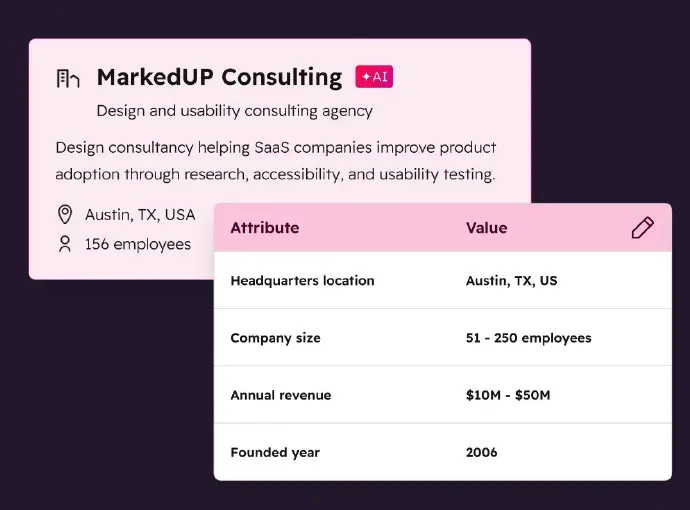
Context Home becomes the reference screen for the whole portal: it measures how complete your data is and automatically fills in missing details (industry, company size, job title), at no extra cost and without using credits.
Marketing Studio 2.0 centralises campaign planning, creation and reporting in one shared workspace, where Campaign, Content and Nurture agents work continuously. Alongside it come an Agent Hub to manage every active agent on a portal from one place, a Revenue Hub that generates quotes from a deal’s full context, and a first CRM integration with ChatGPT Ads and Microsoft Advertising.
0
Credits for Breeze Assistant, Context Home and Marketing Studio
40+
Buying signals tracked by the Prospecting Agent
75/85/90%
Credit usage alert thresholds
What it changes for your team
In short
Less operational work and more time for strategy, provided the rollout on your instance is properly scoped.
In practice, these updates hand part of the operational work (data entry, reporting, first follow-ups) over to AI, and free up time for what stays deeply human: sales strategy, customer relationships, choosing between priorities. As with any HubSpot release, features roll out gradually depending on your edition, and their value depends directly on how they are set up on your instance.
As a HubSpot partner, that’s what we do with you: pick out the features that matter for your business, configure them properly, and spare you an extra layer of tools nobody ends up using.
AI takes care of execution. Strategy is still your job.