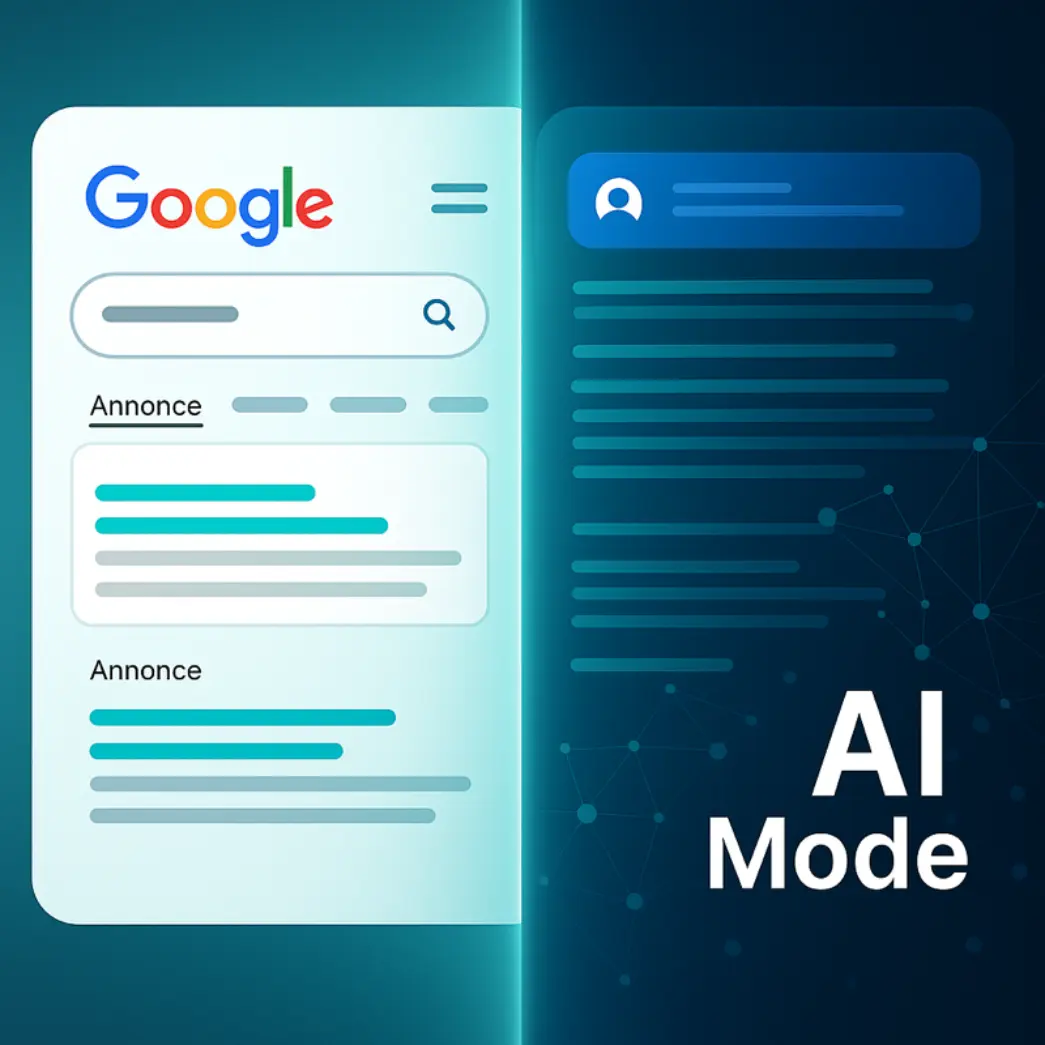
Google AI Mode

Google AI Mode: The End of SEA?

0

Google launches its AI Mode — Is your brand ready for GEA (Generative Engine Advertising)?


When the Search compass shifts North

For twenty years, businesses have built their digital visibility around a stable model: organic search (SEO) and paid search (SEA). But in October 2025, Google officially launched AI Mode in Belgium, powered by Gemini 2.5, and this launch changes everything.

AI Mode is now visible directly from Google’s homepage and also as a dedicated tab after a search, alongside Images, Shopping, Maps or News. AI Mode quickly surpassed 100 million monthly active users in the U.S. and India alone and is now available in more than 200 countries and territories, confirming its massive rollout and growing influence.

It no longer simply displays results with paid (SEA) or organic (SEO) hyperlinks. It directly answers users’ questions in a conversational and personalized way.

Concrete example:
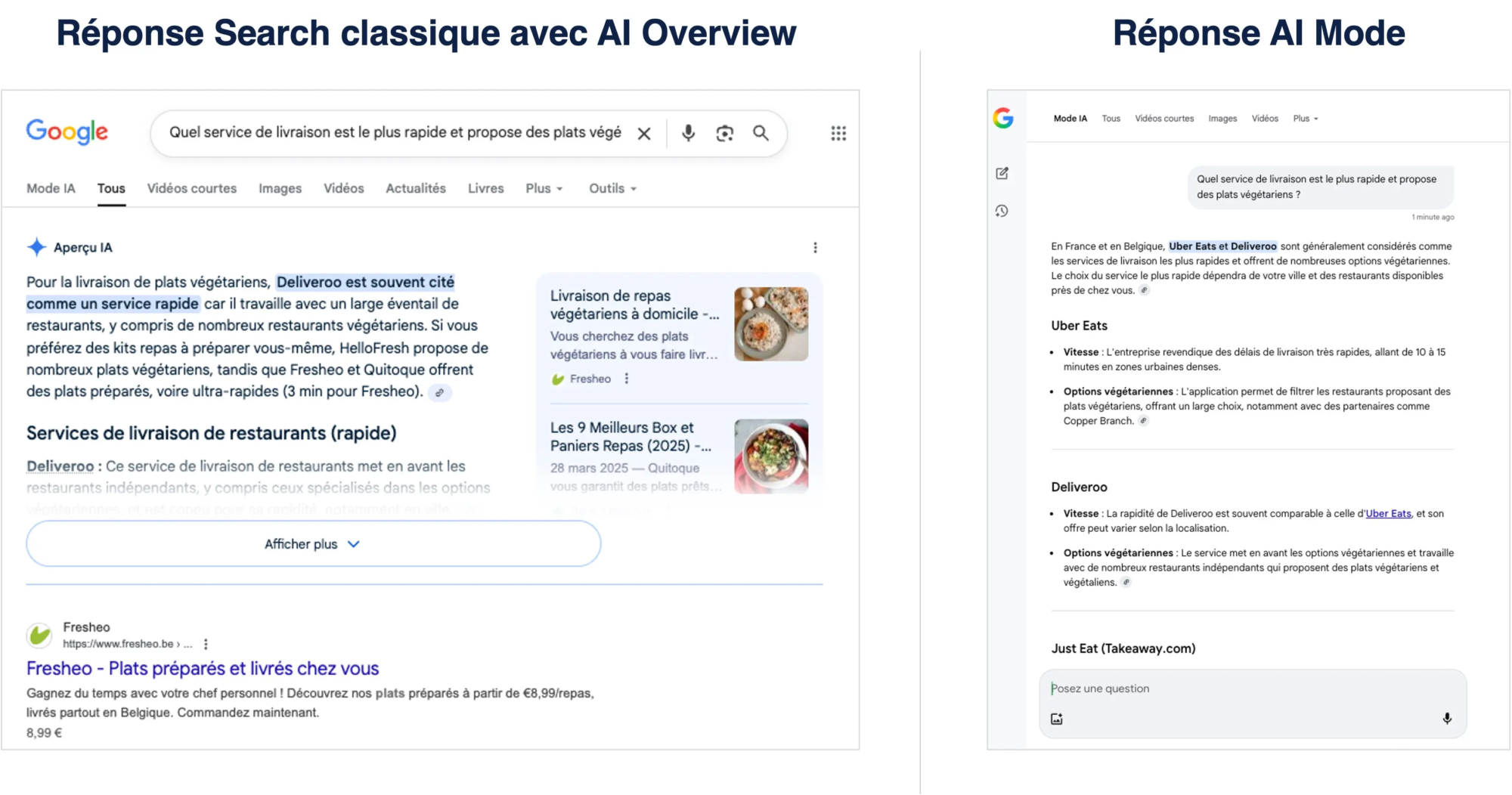
Before, a user typed “food delivery Namur” and saw a list of sponsored and organic links.
Today, the user asks: “Which delivery service in Namur is the fastest and offers vegetarian options?”

The AI generates a single answer and can insert contextual advertising, for example a local caterer, aligned with the user’s intent.

Clicks are no longer guaranteed. The search engine becomes an assistant, and for businesses this shifts how digital investments are made. Advertising campaigns, content and performance indicators must all be rethought.

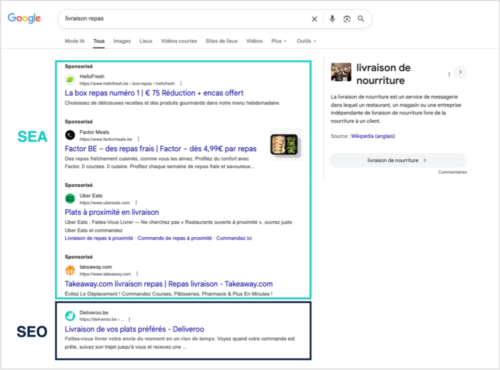
Illustration d'un écran de smartphone montrant les étapes d'une annonce Google Ads classique, puis l'intégration de la technologie 'Keywordless' par AI Max, et enfin la présentation d'une landing page produit optimisée pour le sérum hydratant.

Key takeaway:

Google is shifting from a search engine to a dialogue interface. Your brand must now exist within the answer, not just in the list of results.

From Keywords to Conversation: Understanding the Shift

Before AI Mode – Reactive Search

Until now, SEA operated on a simple model:

  • keywords,
  • precise bidding,
  • text ads displayed above SEO results,
  • and clear metrics: impressions, clicks, conversions.

Businesses paid to appear at the right moment on the right keywords. The model was effective but limited: it didn’t always understand the user’s real intent.

Illustration d'une interface de campagne publicitaire digitale sur fond clair

After AI Mode – Interpretative Search

With AI Mode, Google no longer simply reacts to a query: it interprets and reformulates the question to build a complete answer, enriched with images, videos and integrated ads.

In our Namur example:

“Which delivery service is the fastest and offers vegetarian dishes?”

The AI synthesizes the relevant information and can display, directly within the answer, a contextually appropriate advertisement.

The results are no longer a list — they are dynamic answers. And for advertisers, this means advertising that naturally integrates into the dialogue.

Ads are sourced from Search, Shopping, Performance Max and App campaigns and are “woven” into the AI experience without requiring a new campaign type.

Illustration of a performance dashboard for digital campaigns

Question to consider:

Is your brand ready to be recommended by an AI rather than simply displayed on a results page?

The ChatGPT Effect: The Rise of GEO and the Emergence of GEA

This transformation is part of a movement initiated by ChatGPT, which has taught users to expect direct answers rather than browse through links.

This is known as GEO – Generative Engine Optimization: the art of being cited within AI-generated answers.

And advertising is following the same path: ChatGPT will soon integrate ads directly into its interface, similar to Microsoft, which already displays ads in Copilot, Bing’s AI. We still don’t know whether ads will appear only for free ChatGPT users or for everyone, but one thing is clear: the conversational model is becoming monetizable.

The entire industry is converging toward AI-driven journeys with integrated advertising. Tomorrow’s sponsored answers will be more personalized, more relevant, and more measurable, marking the birth of GEA: Generative Engine Advertising.

Despite this promising effectiveness, the biggest measurement issue is that ad performance in AI Mode is currently not isolated: there is no dedicated reporting column in Google Ads yet, forcing advertisers and financial directors to bid “blindly,” without visibility into AI-specific ROI.

Key figure:

With the rise of GEO and conversational AIs, users are clicking less and less.

AI Summaries

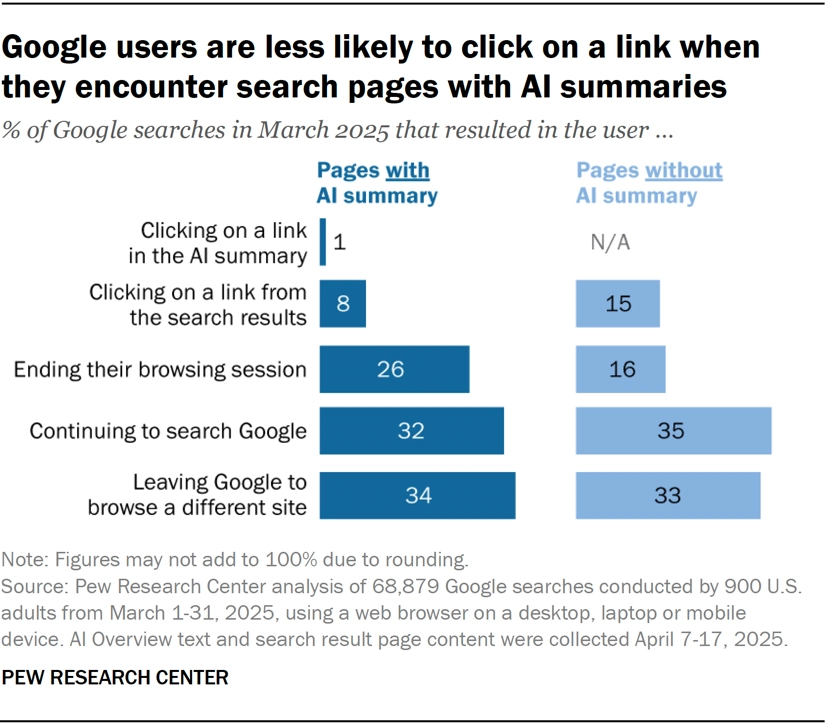
According to a Pew Research study, users exposed to an AI Overview summary click far less on external results: only 8% of them do so, compared with 15% without an AI Overview, and barely 1% click on a link included within the AI Overview itself.

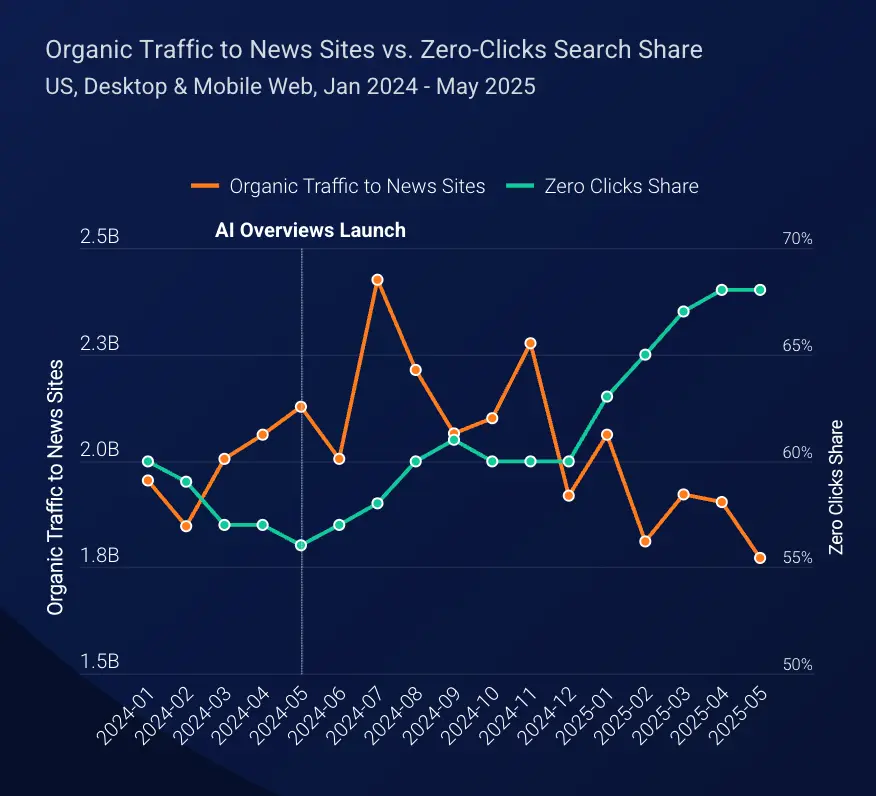
In the same vein, according to a Similarweb report, 70% of news-related searches are already “zero-click” in 2025, compared with 56% last year.

Illustration

More Contextual, Smarter Advertising

The integration of ads within AI-generated answers is not a threat — it’s a natural evolution of SEA.

Advertising becomes contextual: it is triggered based on

  • the topic of the search,
  • the language and tone used,
  • the emotion detected (“I want to save money,” “I’m looking for security”),
  • and the life moment (“I’m moving,” “I’m launching my business”).

GEA represents the shift from “reactive” advertising to more “intelligent” advertising, becoming the next logical step in the dialogue between the user and the AI. Google, OpenAI and others gather vast amounts of data from logged-in users to understand their intentions and deliver highly relevant ads with strong click-through potential.

Fewer overall clicks means greater competition for each remaining click: upward pressure on CPCs and budgets that need to achieve more with less.

Key takeaway:

SEO, SEA, GEO and GEA are converging. Your advertising strategy must be designed as a coherent ecosystem of signals that fuels the intelligence of the engines.