Google AI Mode: 5 Strategies to Stay on Course in the Age of AI

1. Ensure Your Eligibility for AI Mode
Adopt Performance Max and AI Max for Search in Google Ads
These campaigns are key to appearing in AI environments. They leverage machine learning to identify the most promising signals and generate up to +30% more conversions at equivalent cost (Google Marketing Live 2025).
But these algorithms only perform well if your conversions are properly defined and tracked: a poorly guided AI remains an ineffective AI. Remember that AI-driven automation only works when algorithms are steered toward the right signals — namely conversions — within the Google ecosystem.

Switch to Broad Match
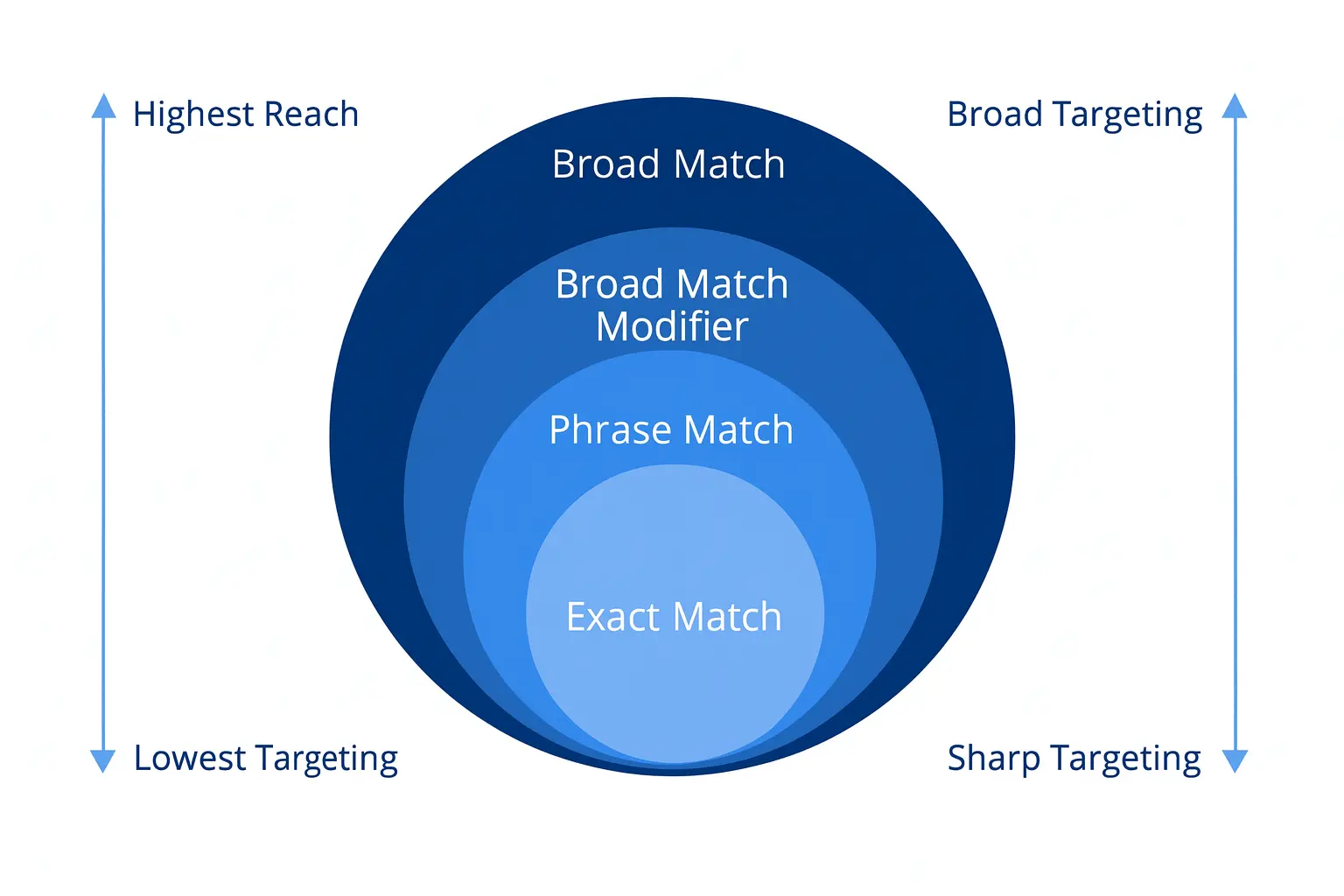
Broad Match is essential to capture conversational queries. Exact Match is too rigid to understand the natural phrasing used in AI Mode. Combine this openness with strong audiences, exclusions and conversion signals to properly guide the AI.
Frame your automation
- Automation does not mean letting go. The expert remains essential to guide and correct learning.
- And while Google now automatically generates ads through AI Max for Search (headlines, descriptions, assets), they must be reviewed and validated to ensure consistency, tone and brand promise.
- Use precise audience signals, negative keywords and enriched product feeds.
Question to consider:
Is your Google Ads account ready to be understood, evaluated and activated by an AI?
This is not about leaving everything to AI, but about combining the best automations with expert control to get the best of both worlds.
2. Redesign Your Content for Conversation
AI doesn’t just analyze keywords — it understands contexts. Your website must become a reliable answer base to feed the algorithms.
Here are the key actions:
- Update your structured data (schema.org, JSON): they determine the eligibility of your content and products in AI-generated answers.
- Anticipate follow-up questions: guides, comparisons, case studies.
- Diversify your formats: articles, photos, videos, tutorials.
Key takeaway:
Your content must feed AI-generated answers and strengthen your brand credibility.
Want to go further? Discover our solutions to optimize your brand through GEO:
3. Redefine Your Performance Indicators
With AI Mode, clicks are no longer enough to measure performance. User journeys become rarer — but also more valuable. When a user reaches your site, you must maximize the value of every visit: smooth navigation, useful content, a convincing experience.
Now measure:
- The quality of leads generated, not just the volume.
- The speed of the conversion journey, to detect friction points.
- The value assisted by AI exposures, even without a direct click.
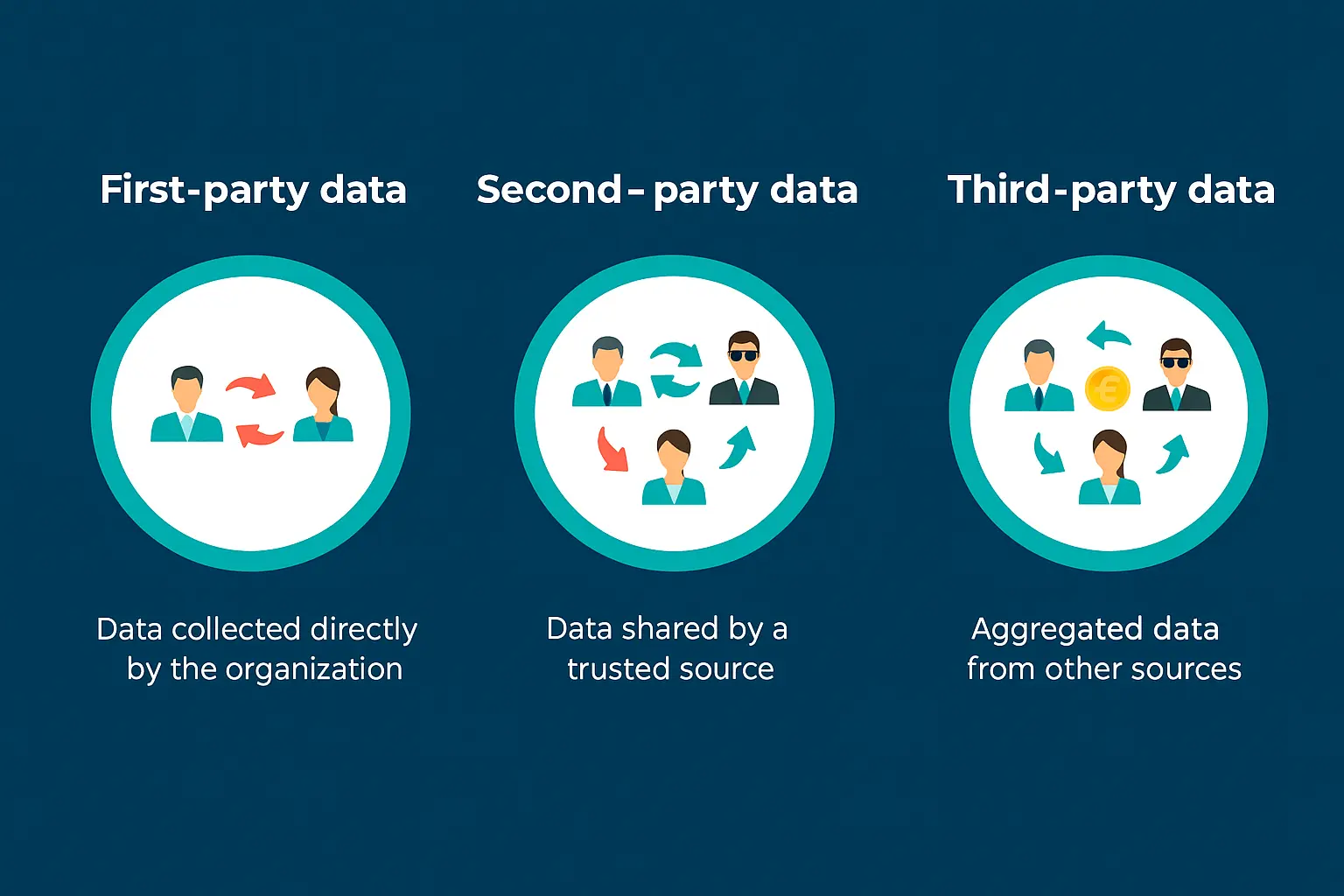
Rely on your first-party data and mid-funnel indicators to track the true impact of your visibility within the AI ecosystem.
Key takeaway:
Fewer clicks does not mean less value — as long as every interaction is used to create a customer experience that converts.
4. Rethink Your Ad Creative
Traditional SEA is not disappearing. It remains essential to capture clear intent through specific keywords and controlled messaging. But part of Search is now shifting toward AI-driven environments, where ads appear directly within Google’s generated answers: this is the logic behind AI Max for Search and Performance Max.
These dynamic campaigns allow Google to automatically choose the most relevant keywords, headlines and even landing pages. This automation speeds up delivery but requires rigorous oversight: controlling exclusions, landing pages, message consistency and brand integrity.
And beyond the technical aspect, you must anticipate adjacency risks: if an ad appears next to an inaccurate or misleading AI-generated answer (an “hallucination”), it can directly harm your brand’s credibility and reputation. In AI Mode, ads must continue the conversation, not break it.
Favor natural, contextual phrasing:
- “Estimate your cost in seconds.”
- “Discover the solution that fits your needs.”
AI favors messages that are useful, coherent and aligned with the user’s reasoning.
Key takeaway:
SEA is becoming hybrid: AI tests, learns and adapts, but the expert remains in control of the strategy, signals and brand consistency.
5. Build Your Own Digital Compass
AI Mode evolves fast. High-performing advertisers will be the ones able to test, learn and adapt.
- Analyze your performance by query type.
- Test different messages and audiences.
- Train your teams on the new rules of GEO and GEA.
Companies that develop this culture of experimentation will remain visible and profitable.
Conclusion
AI Mode does not mark the end of SEA — it marks the end of static SEA. Advertising is becoming conversational, contextual and predictive.
Companies that adapt to this new paradigm will gain in relevance and profitability. Those that don’t risk disappearing… not from the SERPs, but from AI-generated answers themselves.
At Universem, we help brands stay on course:
- ✓ by making their campaigns eligible for AI Mode,
- ✓ by optimizing their content to feed the AI,
- ✓ and by implementing clear and reliable measurement frameworks.
Search is becoming smarter — and more demanding. To stay visible, be an active participant in the AI dialogue.
Key takeaway:
In a world where AI may become your first customer touchpoint, advertising is no longer a channel. It is a strategic conversation to be nurtured continuously.
Take Action
Would you like to assess your readiness for Google’s AI Mode? Our experts can audit your campaigns, audience signals and content to identify your eligibility levers.